 There are moments in life when the mission changes.
Not because we asked for it. Not because we were unprepared. Sometimes life simply hands us a reality that makes the old plan impossible.
For military members and their families, this can feel especially unsettling.
Military life teaches us to understand the mission, prepare for it, execute it, and depend on the people around us to accomplish it.
But what happens when the mission itself changes?
That question became personal for me on May 17, 1994.
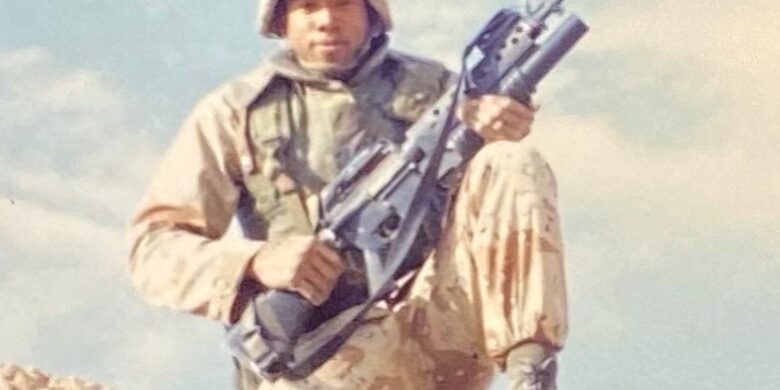
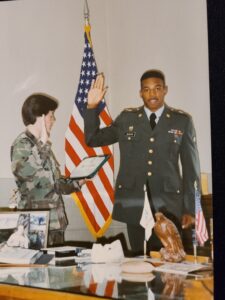
While serving in the United States Army and pursuing an Olympic dream and Officer Candidate school, one bad landing over a hurdle resulted in a devastating knee injury. Seven days later, my left leg was amputated above the knee.
With one wrong step, the old mission was over.
There was no bouncing back because there was no “back” to return to.
And perhaps that is where many of us misunderstand resilience.
Sometimes the goal isn’t getting back.
Sometimes the work is determining what comes next.
In short, what we need to release in order to elevate.
Reckoning
Every transformation has a moment of reckoning.
Something has changed.
A military career ends. A family relocates. A relationship changes. An injury occurs. A financial setback hits. A carefully constructed plan suddenly doesn’t work anymore.
Reckoning means acknowledging what has changed without allowing what happened to dictate everything that happens next.
It also means grieving what’s perceived as loss.
We can honor what was without spending the rest of our lives trying to recreate it.
The question becomes:
What are you still trying to recover that may no longer be recoverable?
Revision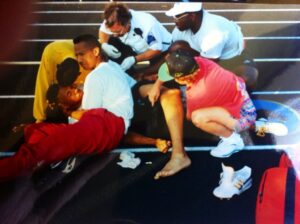
Once we acknowledge what has changed, another question becomes possible:
Given what remains, what is now possible?
That is Revision.
After losing my leg, the dream of representing the United States did not necessarily have to disappear. But the pathway had to change.
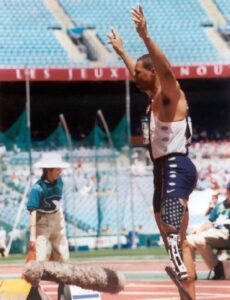
That revised pathway eventually led to the Paralympic Games, first in swimming in Atlanta in 1996, then to the long jump in Sydney in 2000, where I earned a silver medal.
The lesson was larger than sport.
Sometimes we become so committed to the route that we mistake it for the destination.
That happens in careers.
It happens in families.
It happens when leaving military service.
It happens in leadership.
We keep trying to make the old route work because it is familiar, even when life is inviting us to build something different.
The challenge in the revision is making a commitment to the new course.
Revision without action remains an idea.
Renewal
Renewal begins with commitment.
But commitment often exposes a gap.
You can be committed to the next chapter and still not possess everything you need to navigate it. You may have the competency, the knowledge, experience, discipline, and willingness to move forward, but not yet have the capability, the resources, relationships, access, or support to make that movement possible.
That is the gap between competency and capability.
 Military service teaches us something important about closing that gap. Missions are rarely accomplished alone. We rely on the people to our left and right. We rely on intelligence, logistics, resources, communication, and an entire support structure designed to help accomplish the mission.
Yet when the uniform comes off, we sometimes expect ourselves to suddenly do everything alone.
Why?
A veteran can be fully committed to finding employment and still need access to the right opportunity.
A military family can be committed to financial stability and still need resources to navigate an unexpected crisis.
A service member can possess tremendous skills and experience and still need someone who understands how those competencies translate into a new environment.
Commitment doesn’t mean you already have everything you need. Commitment means you’ve decided to move.
And sometimes the next move requires someone to help close the gap.
That is where organizations like Home Front Military Network become so important.
HFMN helps connect service members, veterans, and military families with the resources and relationships that can turn commitment into capability.
They don’t take ownership of the mission.
They help make the mission possible.
Perhaps that is what renewal really looks like.
You make the commitment.
You recognize the gap.
And then you build, borrow, or connect to the capability necessary to move forward.
Because asking for support isn’t a departure from the military mindset.
It’s part of how missions have always been accomplished.
Resonance
Transformation rarely happens in a straight line.
We like to think we will finish Reckoning, move neatly into Revision, and then arrive at Renewal.
Life doesn’t work that way.
You can be reckoning with one loss while revising your vision in another area and renewing your commitment somewhere else.
You can be in all three at the same time.
And that can become overwhelming.
This is where Resonance becomes important.
Resonance is recognizing the rhythm required to sustain the transformation. It is knowing when to push, when to recover, when to listen, and when to step away.
Rest is not separate from the movement.
Rest is part of the movement.
One of my coaches used to remind me that everything is training.
What you eat is training.
How much you sleep is training.
What you listen to is training.
The people you surround yourself with are training.
Even the breaks you take are training.
As an athlete, recovery wasn’t what happened when training stopped. Recovery was part of the training plan. Without it, the body could not absorb the work we were asking it to do.
Transformation works the same way.
When the mission changes, there can be an urgency to figure everything out immediately. We want the new plan, the next assignment, the solution, the destination.
But constantly pushing forward can become its own obstacle.
Resonance asks a different question:
What rhythm will allow me to sustain this transformation?
Sometimes the answer is movement.
Sometimes it is reflection.
Sometimes it is asking for help.
Sometimes it is sleep.
Sometimes it is shutting off the noise long enough to hear what this season is teaching you.
That is why Resonance isn’t something waiting for us at the end of Reckoning, Revision, and Renewal.
Resonance holds all three together.
You reckon with what has changed.
You revise what is possible.
You renew your commitment to move.
And through it all, you establish the rhythm that allows you to keep moving without losing yourself in the movement.
So if the mission has changed, don’t assume the answer is simply to work harder at yesterday’s strategy.
Maybe the question is:
What do I need to build into my rhythm so I can sustain the person I am becoming?
Because everything is training.
Even the pause.
John
John Register is a global leadership expert who helps leaders amputate what no longer serves them, make earlier decisions, and transform adversity into competitive advantage.
 John F. Register, CSP, CPAE, PLY
Founder, Irreversible Leadership™️
CEO Inspired Communications International™️
Hall of Fame Speaker – Paralympic Medalist – Combat Veteran