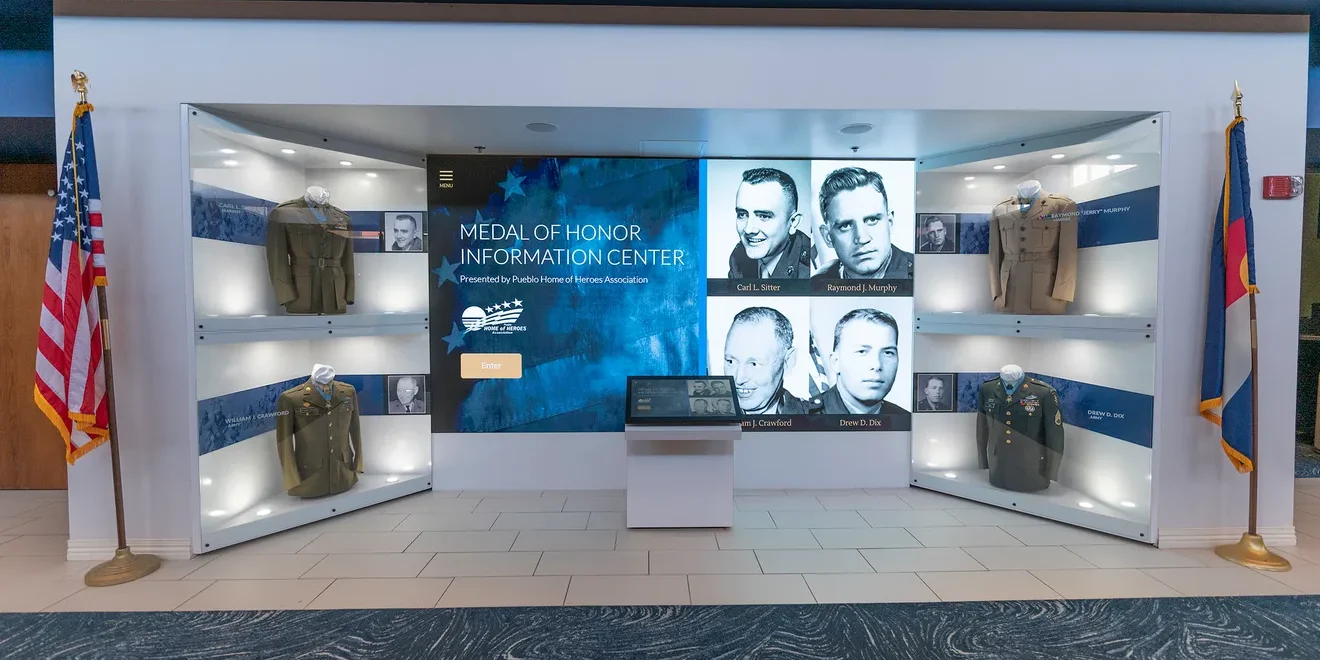
President Dwight D. Eisenhower once said, “What is it…something in the water out there in Pueblo? All you guys turn out to be heroes!” after he placed the Medal of Honor around Raymond G. “Jerry” Murphy’s neck in 1953. At that time, Murphy was the third Medal of Honor recipient from Pueblo, Colorado.
Less than 16 years later, another man, Drew D. Dix, became the fourth living Medal of Honor recipient from Pueblo. Murphy, Dix, William J. Crawford, and Carl L. Sitter were all living Medal of Honor recipients from Pueblo.
Rep. Scott McInnis’ declaration of Pueblo as “The Home of Heroes” was recognized by Congress on July 1, 1993, according to the Congressional Record.
Here’s a little backstory about the four Medal of Honor recipients who gave Pueblo its Home of Heroes name.
 William J. Crawford graduated from Central High School in 1936 and was drafted to fight in World War II in 1942, according to Army enlistment records. Private Crawford braved aggressive machine gun fire and singlehandedly destroyed three German machine gun emplacements to allow his fellow soldiers in Company I to advance past the enemy’s line of defense in Italy in September 1943. Crawford was a prisoner of war and presumed dead when the Medal of Honor was presented to his father in 1944.
In 1976, U.S. Air Force Academy (USAFA) cadet James Moschgat was reading about the Allied campaign in Italy when he came across his squadron janitor’s name, Bill Crawford. At 66 years old, Crawford formally received the Medal of Honor for his valor from President Reagan at a U.S. Air Force Academy commencement ceremony on May 30, 1984. Crawford lived to be 81 and is buried in the Air Force Academy’s cemetery, even though he was enlisted in the Army.
Carl Sitter graduated from Central High School in 1940 and enlisted in the U.S. Marine Corps shortly after. He reached the rank of colonel before his 1970 retirement from active duty. Sitter earned a  Silver Star Medal in Guam during World War II, then went on to fight in the Korean War battles of Inchon and the Chosin Reservoir.
Sitter’s gallantry in the frigid Battle of Chosin Reservoir on November 29, 1950, is what led him to receive the Medal of Honor. He led a company of 1st Marines up a steep, snow-covered hill south of the reservoir. Intense hand-to-hand combat broke out when enemy counterattacks broke through the Marines’ line of defense.
Sitter was working to receive a seminary degree to become a minister for elderly and homebound individuals shortly before his death at the age of 71.
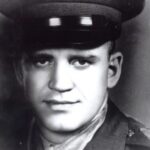 Sitter wasn’t the only Pueblo Marine who would risk his life in the Korean War to save others. Second Lt. Raymond “Jerry” Murphy was a standout athlete at Pueblo Catholic High School. He went on to play football at Fort Lewis College.
At just 23 years old, Murphy was wounded while carrying a stretcher by a mortar shell on February 3, 1953. He refused medical help and proceeded to make several trips up Ungok Hill to carry injured Marines to safety. He made these trips through heavy enemy fire and was wounded a second time but refused medical attention again. He finally sought medical care after all Marines were recovered from the hill. Murphy passed away in 2007.
Jerry Murphy Road runs through Pueblo’s Belmont and University Park neighborhoods.
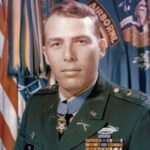 Drew Dix joined the ROTC program at Pueblo Centennial High School and hoped to join the Army to follow in his father Harold’s footsteps. He enlisted after his high school graduation and started his work with the Army’s Special Forces at just 21 years old. At 23, Dix was working in South Vietnam as a CIA special forces advisor on January 31, 1968. Despite what was supposed to be a holiday cease-fire, enemy Viet Cong forces launched the historic Tet Offensive invasion.
Dix’s fearlessness during the attacks on Chau Doc Province led to the rescue of an American nurse, eight civilians, a young girl, two Filipino workers, and the deputy province chief’s family. His actions also led to the capture of a high-ranking enemy official and 19 other prisoners.
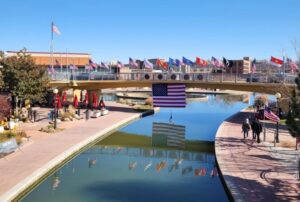
There are a few other Medal of Honor recipients with ties to Pueblo. While the term “Home of Heroes” is specific to Crawford, Sitter, Murphy, and Dix because they were raised in Pueblo, attended Pueblo high schools, and were all living Medal of Honor recipients at the same point in time.
Warren C. Dockum is not considered part of the original four Medal of Honor recipients. Dockum was a Union Army soldier from Clinton County, New York. He captured the Confederate Savannah Guards’ flag on April 6, 1865. He moved to the Turkey Creek area near Pueblo in 1893 and is buried at Roselawn Cemetery in Blende.
Clinton Romesha spent four years in Pueblo, Colorado. He received the Medal of Honor from President Barrack Obama in 2013. Romesha led comrades to suppress a 300-fighter enemy attack on October 3, 2009, during a day-long battle in Afghanistan.
While Pueblo may be known for a lot of things, “Home of Heroes” is by far its proudest badge of patriotism to the United States military.
References:
“Here’s why Pueblo is called the Home of Heroes.” The Pueblo Chieftain. May 6, 2024.
https://www.chieftain.com/story/news/2024/05/06/heres-why-pueblo-is-called-the-home-of-heroes/73105400007/