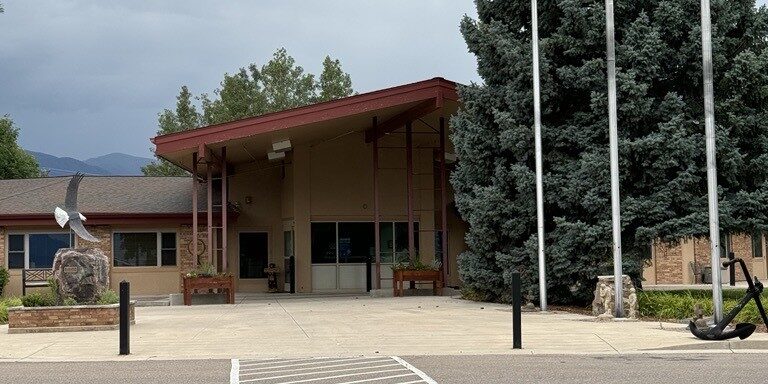
I was first introduced to Bruce McCandless Veterans Community Living Center in the early 2000s, when my grandfather, an Army Air Corps veteran from World War II, went to live there. While I don’t remember many specific details about his time, I do remember going almost every Sunday to either take him out for the day or spend time visiting. I remember the staff always being incredibly kind and helpful. He was a handful, as many veterans are, but the nurses often just laughed off his antics.
Fast forward to 2024. After years of my brother and sister-in-law caring for our father, a Navy veteran from Vietnam, we had to make the difficult decision to move him into a nursing home. We visited several facilities because, ultimately, we wanted it to be his choice. It was almost a no-brainer that he chose Bruce McCandless Veterans Community Living Center. He already knew the level of care and compassion he would receive there.
But as an adult, with a deeper understanding of life and, sadly, death, I never expected that care and compassion to so far exceed my expectations. Yes, there were hiccups along the way, but overall, I was blown away by the staff. Nearly every time I visited, a nurse or staff member would tell me how much they loved my father. He made them laugh. He had a way of making each person feel special, even if it was as simple as telling them, “God bless you.”
There is one particular nurse (she knows who she is) who, in my opinion, went above and beyond for my father. She adored him, and they shared countless inside jokes. One of my favorite memories is when my father casually told me he had proposed to her. We all laughed, especially when she said he was trying to get her beat up.
When I think of caregivers, I think of my brother and sister-in-law, who gave everything to help our dad stay in his home for as long as possible. That meant sleepless nights, endless cooking, countless candy runs, and more than a few drives around town when my father decided he wanted to drive and managed to sneak his car keys.
When I think of caregivers, I also think of every single nurse and staff member at Bruce McCandless Veterans Community Living Center, the ones who greeted my father, brought him meals, encouraged him to get out of his room and roam the halls on his scooter. I think of them sitting beside him during anxiety attacks, calming him just by talking softly and rubbing his back.
And when I think of caregivers, I think of those final days with my father. He had countless nurses checking on him. He had all four of his children by his side. His brother and favorite sister-in-law were there. His nephew and his great-niece and nephew came to tell him they loved him. He was surrounded by so much love from family and from those who cared for him. And I know he felt it, even when his eyes were closed.
After he took his last breath, with his family beside him, the staff at Bruce McCandless Veterans Community Living Center came to each of us and wrapped us in love and support. Many of them cried alongside us. The respect and care they showed him, and the proud military sendoff they gave, were more than any daughter could have asked for.
So, when I think of the Month of the Military Caregiver, my heart goes out to every person who made a difference in my father’s life. I think of the nurse I will always cherish for loving my father as if he were her own. I think of the smiles on their faces when they walked into his room and heard him and I bickering. I think the caregivers at Bruce McCandless Veterans Community Living Center are truly angels. The love, care, and compassion they give to our veterans, many of whom are living out their final days, weeks, months, or years, is immeasurable.
Thank you to every person, whether a loved one or a trained professional, who cares for our service members, veterans, and their families. You make a difference, and you deserve recognition far beyond these words.
Resources and support are available for caregivers and military families navigating caregiving responsibilities, grief, and long-term care.
Program of General Caregiver Support Services (PGCSS), VA-ECHCS
The VA’s Caregiver Support Program offers a Program of General Caregiver Support Services (PGCSS) and a stipend-based Program of Comprehensive Assistance for Family Caregivers (PCAFC). Caregivers in the general program receive education, coaching, and up to 30 days of respite care annually if clinically needed. The PCAFC program provides additional benefits including a monthly stipend (roughly $1,800–$3,000 depending on need and location), enhanced respite options, mental health services, and travel support. The program also offers extensive caregiver resources, including training (CPR, suicide prevention), CBT-based coaching, and a support line staffed by social workers. For more information, visit the VA website: The Program Of General Caregiver Support Services | Veterans Affairs.
Veteran Directed Care, VA-ECHCS
The Veteran Directed Care (VDC) Program is a VA home care option designed to give veterans greater control over their caregiving by allowing them to choose and manage their own caregivers rather than relying on traditional agencies. A major strength of the program is its flexibility, often reinforcing existing support systems by compensating family members or friends already providing care. This helps reduce caregiver strain while maintaining stability and familiarity for the veteran. For more information, visit the VA website: Veteran-Directed Care – Geriatrics and Extended Care or visit DRCOG website: Homepage | Denver Regional Council of Governments.
Family Caregiver Support Center, Pikes Peak Area Agency on Aging
Area Agencies on Aging (AAAs) are federally and state-funded organizations that help older adults 60+, those who are disabled, and caregivers access services needed to safely age at home, with programs tailored to local community needs. They provide or coordinate key supports such as transportation, in-home care, case management, Medicare counseling (SHIP), and long-term care advocacy. A core part of their role is offering consultations that guide families through complex caregiving decisions, including understanding medical conditions like dementia, planning for legal and financial needs (such as powers of attorney and long-term care costs), and navigating care options across home and facility settings. They also emphasize caregiver support self-care, to prevent burnout, while offering unbiased education, workshops, and referrals to additional resources. For more information about their program, please visit their website: Pikes Peak Area Agency on Aging – Pikes Peak Area Council of Governments.
Other sites:
- Blue Star Neighborhood has a caregiver resources folder on their website: https://neighborhood.bluestarfam.org/media_center.
- RAISE Family Caregiving Advisory Council & Advisory Council to Support Grandparents Raising Grandchildren, Wednesday, 4/29/26, 12-4:00 pm ET, joint virtual meeting of the RAISE Family Caregiving Advisory Counciland Advisory Council to Support Grandparents Raising Grandchildren.